
Converting a Bath to a Shower Tray: What Homeowners Need to Know Before Remodelling
When it comes to remodelling your bathroom - or any other room in your house - the long and short of it is this: You can have anything you want, but there’s just the right way of going about it.
More often than not, converting a bath to a shower tray is a simple enough task. It will involve a bit of plumbing, perhaps some electrical work and some tiling, too. For bigger jobs, such as converting a bathroom into a wet room, there are structural considerations to make. Wet rooms are heavy and need a sturdy floor beneath them, but again, that’s just the right way of going about it.
Walk-In Showers, Shower Trays, Baths and Wet Rooms
Like your kitchen, your bathroom is one of the most functional, most used spaces in your home. If it ever feels like a chore to use, then it can be improved to suit your needs.
Most bathrooms will have a toilet and a sink, although some are in separate rooms. (If you want to get rid of that wall to create one large bathroom, we’ve put a separate article together called What to Know Before Removing a Partition or Load-Bearing Wall for an Open-Plan Kitchen that explains more about that process.) While the layout of the bathroom is very important to its usability, a toilet is generally a toilet and a sink is generally a sink.
Showers and baths, however, vary greatly in style and function and are the main element of the space.
Baths - Out of all the options, baths offer the best benefits for relaxation, muscle relief and wellbeing, and they are versatile enough for bathing children and pets. They are, however, the least efficient and most time-consuming.
Shower Trays - These are the most affordable, low maintenance and easy-to-install options. While durable, they are the most prone to surface damage and are not as accessible as a walk-in shower.
Walk-in Showers - Walk-in showers are accessible and safe, and their design seamlessly opens up space in a bathroom. The installation cost is quite high and requires a good slope design for effective drainage.
Wet Rooms - Open plan bathrooms that optimise space, are fully accessible and are easy to maintain. They do have high installation costs, need to be fully waterproofed and need good ventilation, too.

How to Accommodate Your Ideal Bathroom
As mentioned above, removing load-bearing or partition walls to accommodate a new bathroom layout is an option, but the main consideration here is how a new bathroom might impact the structure of your home.
Specifically, we’re thinking about wet rooms here. They’re heavy, and there’s no way around that, so what they need is a robust floor to bear their weight. After an inspection it might be that the floor in your space is already strong enough to have a wet room built on it. If not, structural work can always be done to the floor beforehand to ensure the integrity and safety of your home before building work commences.
Additionally, every bathroom we fit will have a silicone membrane beneath the finishing that runs up the wall, creating a watertight basin that protects the rest of your home from water damage.
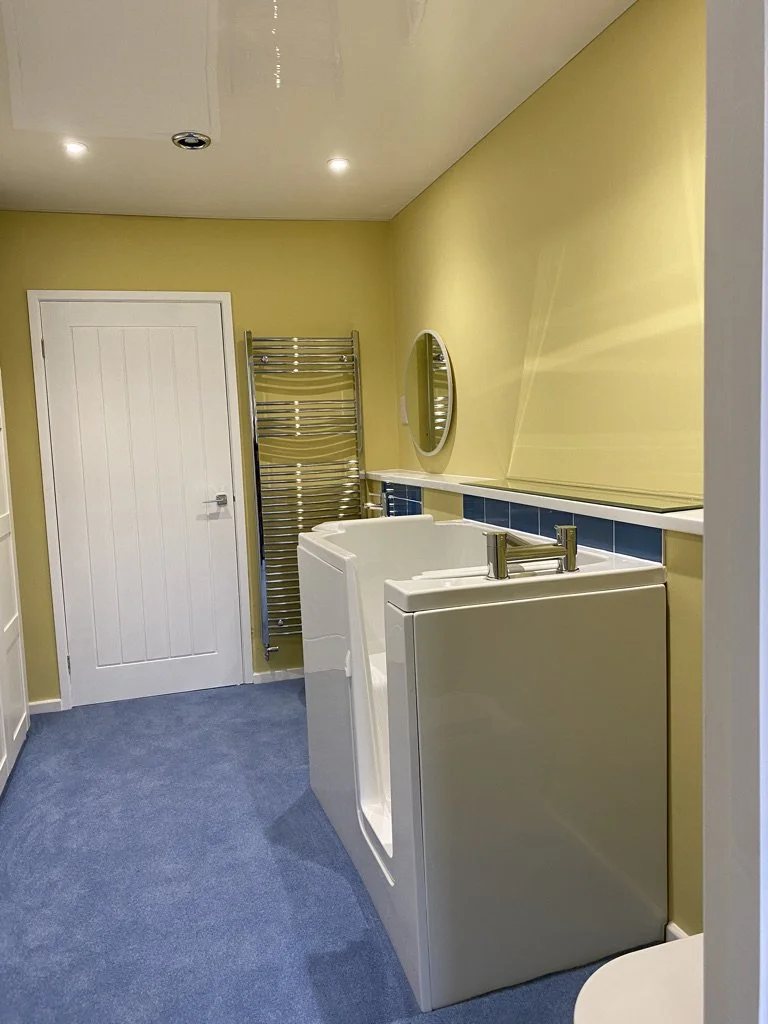
Call HouseFix for a Competitive Quotation for Bathroom Fitting
HouseFix are happy to provide a quotation for any structural work required to accommodate your new bathroom, and we are happy to provide a quotation for the removal of your existing bathroom and the full installation of a new one, too.
If you’re looking for a single contractor that will see you through the installation of your new bathroom from start to finish, consider HouseFix to take care of that part for you. Head to Bathroom Fitting for more information or Contact Us today.
